

Magtein® Brain Support at a glance*
- Supports working memory, long-term memory, and learning speed
- Supports executive functioning
- Supports stress reduction and calm
- Supports parasympathetic relaxation pathways and improves emotional resilience
- Supports improved sleep quality
- Supports healthy brain aging
Magtein® Brain Support
Containing Magnesium L-Threonate
Magtein® Brain Support does NOT replace other magnesium supplements, such as Magnesium Essentials, it is different!
Magtein® Brain Support is a patented form of magnesium bound to L-threonate. Brain Support is highly absorbed by the brain, crossing the blood–brain barrier much more than other magnesium forms. This produces unique neurological and cognitive benefits not seen with magnesium oxide, citrate, or glycinate. Magtein® Brain Support supports memory, cognitive performance, stress reduction, sleep quality, and long-term brain health by increasing neuronal magnesium levels, enhancing synaptic density, modulating neurotransmission, and supporting brain cell mitochondrial function.
About Magnesium
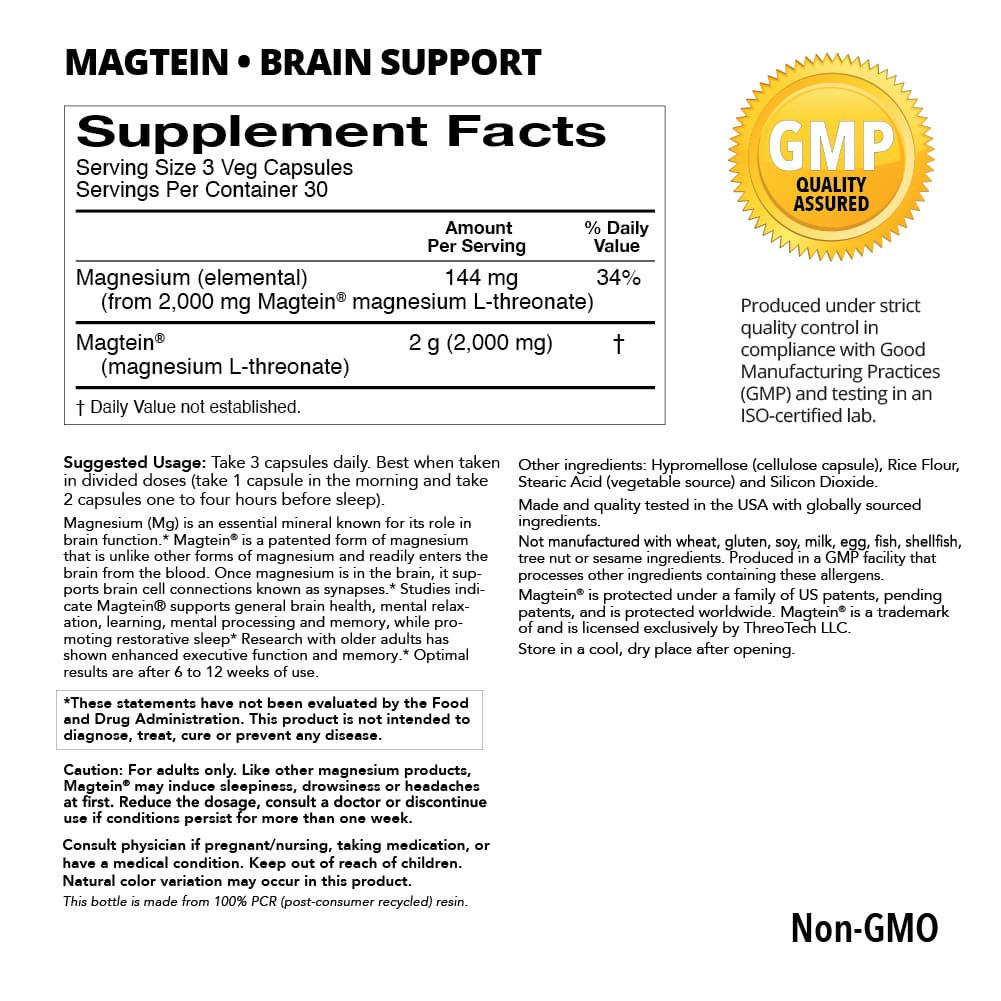
Magnesium (Mg) is an essential mineral known for its role in brain function.* Magtein® is a patented form of magnesium that is unlike other forms of magnesium and readily enters the brain from the blood. Once magnesium is in the brain, it supports brain cell connections known as synapses.* Studies indicate Magtein® supports general brain health, mental relaxation, learning, mental processing and memory, while promoting restorative sleep* Research with older adults has shown enhanced executive function and memory.* Optimal results are after 6 to 12 weeks of use.
Natural Sources
Magnesium is found in whole grains, nuts, legumes, seafood and green vegetables. However, “food processing … can reduce its magnesium content by 80%.”
Symptoms of Magnesium Deficiency may include:
- fatigue
- anxiety
- depression
- migraines
- high blood pressure
- high blood sugar
- metabolic syndrome
- restless leg syndrome (RLS)
- insomnia
- irritability
- muscle weakness
- irregular heart beats
- poor nail growth
Research suggests Magnesium may support health in the following ways:*
- Fuels almost all metabolic processes!
- Increases muscle formation and muscle strength
- Hormone function, including insulin
- Balances acid levels in the body
- DNA production (genetics), as well as the stability of DNA
- Mood enhancement and brain function
- Relaxation of blood vessels
Magnesium: For the Stressful Life
A 2010 article in Medical Hypotheses stated that “chronic stress decreased both free and total plasma ionized magnesium and simultaneously increased oxidative stress in humans. These findings supported the necessity for magnesium supplementation with antioxidant vitamins for patients living in conditions of chronic stress.” Americans know stress, and without adequate magnesium, stress increases the risk of heart disease and depression. The article also adds “chronic stress whether physical (i.e. exertion, heat, cold, critical illness, trauma – accidental or surgical, noise, burns), or emotional (i.e. pain, anxiety, excitement or depression) increases need for magnesium.” This same article emphasized magnesium supplementation for treatment-resistant depression (TRD) – and reported that 220 out of 225 cases of TRD had been successfully treated with magnesium. (Note: dosages in each case were different and were medically supervised.)
Magnesium: Breath to Your Muscles – Even aging muscles!
Magnesium increases oxygen uptake in muscles, so having sufficient levels can help with exercise performance and endurance. Magnesium increases muscle strength and endurance and protects against cell damage. You want to make sure you have an ample supply, especially as aging occurs.
Supports Reduced Risk for Metabolic Syndrome & Components!
There is now strong evidence that dietary magnesium lowers the risk of metabolic syndrome.
Diabetes Mellitus Type 2: Magnesium Depletion is Common
Over 25% of those with diabetes have low magnesium levels. Magnesium plays a crucial role in sugar and carbohydrate metabolism. Magnesium can improve sugar metabolism and insulin sensitivity.
Bone Health
As the magnesium content of bone decreases, bone becomes more brittle. Some studies have found lower magnesium levels in bones of women with osteoporosis compared to those without… So getting enough magnesium may help protect your bones.
Drugs Can Deplete Magnesium!
Diuretics (“water pills”), antibiotics, and PPI’s (proton pump inhibitors, i.e. Nexium, Prevacid, Pepcid) can deplete magnesium levels. In fact, the FDA recommends monitoring magnesium levels in all patients on PPI’s especially if also taking diuretics (water pills).
Magnesium for Migraines
Supplementing with magnesium (from 450 mg – 600 mg per day) has been helpful in reducing the frequency and severity of migraine headaches. Studies have shown benefit in both children and adults. “The available evidence suggests that up to 50% of patients during an acute migraine attack have lowered levels of ionized magnesium. Infusion of magnesium results in a rapid and sustained relief of an acute migraine in such patients. Two double-blind studies suggest that chronic oral magnesium supplementation may also reduce the frequency of migraine headaches. Because of an excellent safety profile and low cost and despite the lack of definitive studies, we feel that a trial of oral magnesium supplementation can be recommended to a majority of migraine sufferers.”
Dosage Recommendations
Suggested Usage: Take 3 capsules daily. Best when taken in divided doses (take 1 capsule in the morning and take
2 capsules one to four hours before sleep) or as directed by a healthcare professional.
Precautions & Safety
For adults only. Like other magnesium products, Magtein® may induce sleepiness, drowsiness or headaches at first. Reduce the dosage, consult a doctor or discontinue use if conditions persist for more than one week. Consult physician if pregnant/nursing, taking medication, or have a medical condition. Natural color variation may occur in this product.
Keep out of reach of children.
Clinical Nutrition: A Functional Approach, 2nd Ed, 2004, Med Hypotheses, vol 74, 2010, Advanced nutrition and Human metabolism, 5th ed, 2009, Magnes Res, vol 19, 2006, Magnes Res, vol 20, 2007, J Intern Med, vol 252, 2007, Am J Clin Nutr, vol 84, 2006, Am J Ther, vol 8, 2001, Clin Neurosci, vol 5 1998, Linus Pauling Institute Online: Magnesium, 2007 http://lpi.loregonstate.edu